
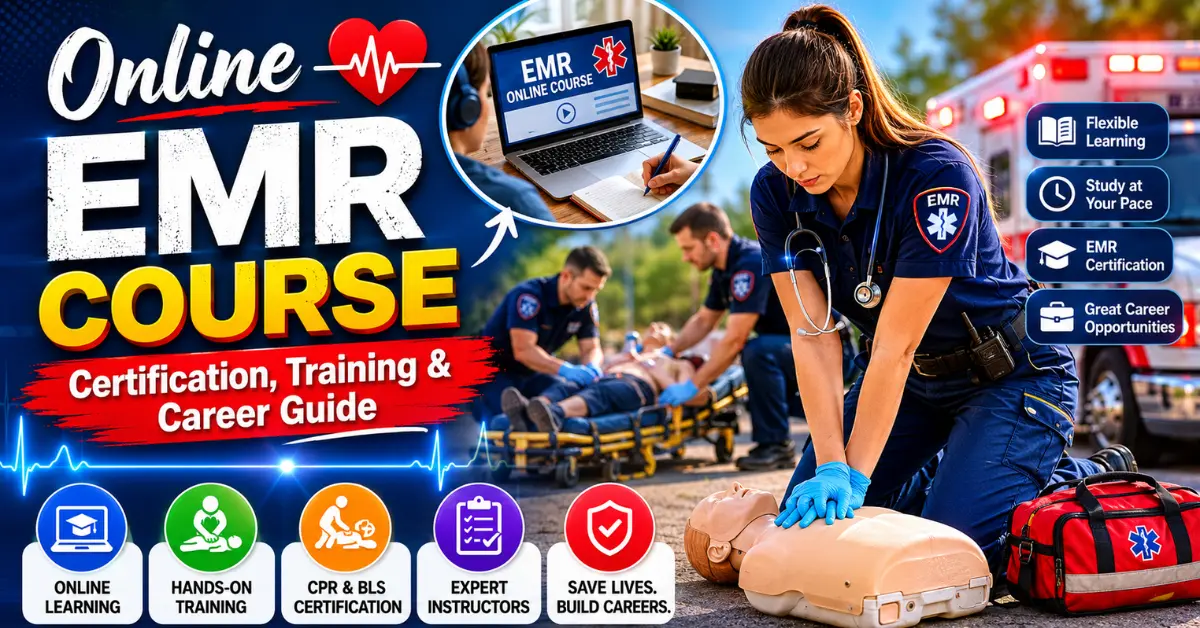
Medical emergencies can happen anytime, anywhere — and the first few minutes often make the biggest difference. That’s why trained emergency responders play such an important role in saving lives before advanced medical help arrives.
An online EMR course gives students the knowledge and practical skills needed to respond confidently during emergencies. Whether you want to start a career in emergency medical services, become a firefighter, improve workplace safety skills, or simply learn how to help others during critical situations, EMR training is a strong first step.
Today, many students prefer online EMR programs because they offer flexible learning, affordable training options, and faster certification pathways. These courses combine online theory lessons with hands-on practical training, making it easier to study from home while still gaining real-world emergency response experience.
In this complete guide, you’ll learn everything about online EMR courses, including certification requirements, training topics, course costs, career opportunities, salary expectations, and tips for choosing the best program for your goals.
Suggested Course
Pharmacy Technician Online Course
What Is an Online EMR Course?
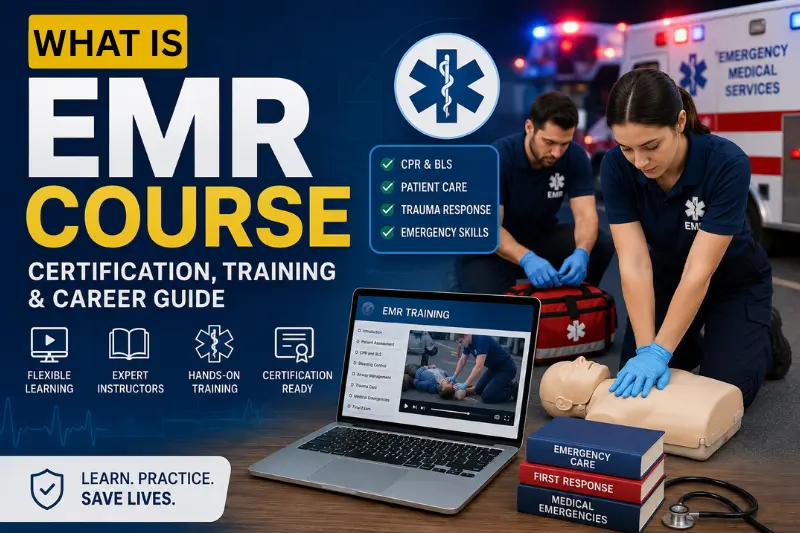
An online EMR course is a training program designed to teach students how to provide immediate emergency medical care before advanced medical teams arrive.
EMR stands for Emergency Medical Responder. It is considered the entry-level certification in the emergency medical services (EMS) field.
Most online EMR programs combine:
- Self-paced online learning
- Video lessons
- Quizzes and assessments
- Virtual simulations
- In-person skills training
- CPR and Basic Life Support (BLS) practice
The online portion covers the theory and knowledge, while the practical training focuses on hands-on emergency response skills.
What Does an Emergency Medical Responder Do?
Emergency Medical Responders are trained to stabilize patients during medical emergencies and traumatic situations.
Their responsibilities may include:
- Performing CPR
- Controlling severe bleeding
- Assisting with breathing emergencies
- Using an AED (Automated External Defibrillator)
- Assessing injured patients
- Managing shock and trauma
- Helping during accidents or disasters
- Supporting EMTs and paramedics
EMRs often arrive first at emergency scenes, making their role extremely important.
Who Should Take an Online EMR Course?
An online EMR course is ideal for people who want flexible training while preparing for emergency response roles.
Common students include:
- Future EMTs and paramedics
- Firefighters
- Police officers
- Security personnel
- Coaches and athletic staff
- Industrial workers
- College students
- Healthcare career beginners
- Search and rescue volunteers
Many people also take EMR training simply to gain life-saving skills for their communities and families.
Benefits of Taking an Online EMR Course
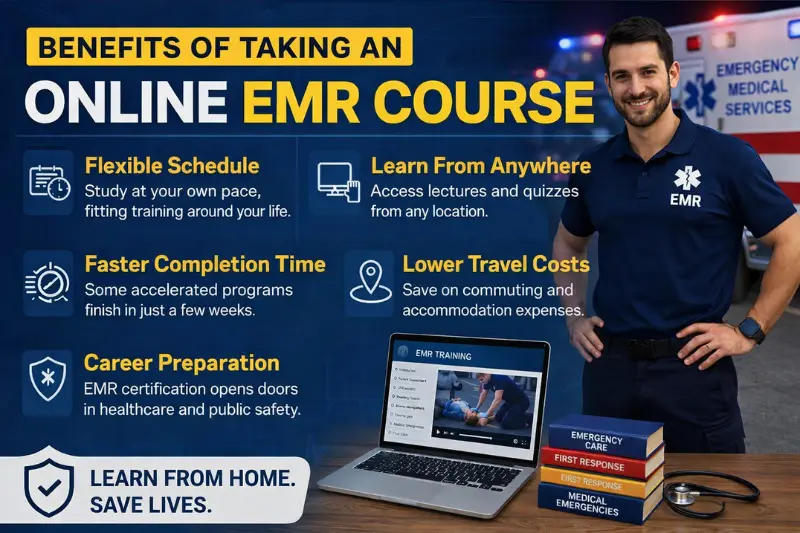
Online learning has made emergency medical training more accessible than ever.
Flexible Schedule
Most online EMR courses allow you to study at your own pace. This makes it easier for working adults and students to complete training around their schedules.
Learn From Anywhere
You can complete lectures, quizzes, and coursework from home using a laptop or mobile device.
Faster Completion Time
Some accelerated online EMR programs can be completed in just a few weeks.
Lower Travel Costs
Online learning reduces commuting and accommodation expenses.
Career Preparation
An EMR certification can open doors to careers in healthcare, emergency response, and public safety.
What Will You Learn in an Online EMR Course?
A quality online EMR course covers both medical knowledge and practical emergency skills.
Core Topics Usually Include
Patient Assessment
Learn how to quickly evaluate a patient’s condition during emergencies.
CPR and Basic Life Support
Understand how to respond to cardiac arrest and breathing emergencies.
Trauma Care
Treat injuries such as fractures, burns, bleeding, and head trauma.
Medical Emergencies
Handle conditions like strokes, seizures, allergic reactions, and diabetic emergencies.
Airway Management
Learn how to help patients who are struggling to breathe.
Emergency Childbirth
Some programs include basic childbirth emergency training.
Incident Management
Understand scene safety, communication, and emergency coordination.
Online EMR Course vs EMT Course
Many beginners confuse EMR and EMT certifications.
Here’s a simple comparison:
| Feature | EMR | EMT |
| Training Level | Entry-Level | Advanced Entry-Level |
| Course Length | Shorter | Longer |
| Medical Skills | Basic Emergency Care | More Advanced Care |
| Patient Transport | Usually Limited | Common Responsibility |
| Career Path | First Responder | Roles Ambulance & EMS Roles |
An EMR certification is often the first step toward becoming an EMT or paramedic.
How Long Does an Online EMR Course Take?
Course length depends on the provider and state requirements.
Most programs include:
- 40–60 hours of coursework
- Online study modules
- Skills verification sessions
- Final written and practical exams
Some students finish within:
- 2 to 8 weeks
Flexible programs may allow longer completion timelines.
Do Online EMR Courses Require Hands-On Training?
Yes. Even fully online programs usually require an in-person skills session.
Hands-on training helps students practice:
- CPR
- Patient assessment
- Splinting
- Airway management
- Trauma response
- Emergency scenarios
This practical experience is essential because emergency response is a hands-on profession.
How Much Does an Online EMR Course Cost?
The cost of an online EMR course varies depending on the school and included materials.
Typical expenses may include:
- Tuition fees
- Textbooks
- Online access codes
- CPR certification
- Skills testing fees
Average total costs often range between:
- $300 to $1,000
Some schools also offer payment plans and financing options.
How to Choose the Best Online EMR Course
Not all EMR programs provide the same quality of education.
Before enrolling, check these important factors.
Accreditation and Approval
Make sure the course follows:
- National EMS education standards
- State certification requirements
Experienced Instructors
Look for programs taught by licensed EMS professionals.
Flexible Learning Platform
Choose a course with:
- Mobile access
- Recorded lessons
- Progress tracking
- Student support
Hands-On Skills Training
A strong program should include realistic practical training.
Certification Eligibility
Verify that the course prepares you for state or national certification requirements.
Career Opportunities After EMR Certification
An EMR certification can lead to several rewarding career paths.
Common opportunities include:
- Fire departments
- Law enforcement
- Industrial safety teams
- Campus emergency response
- Event medical staff
- Ambulance support roles
- Rescue organizations
Many students also continue their education to become:
- EMTs
- Paramedics
- Nurses
- Physician assistants
How Much Do EMRs Make?
Salaries vary by location, experience, and job type.
Entry-level emergency responders may earn:
- $30,000 to $50,000 per year
Professionals working in fire departments, industrial safety, or specialized response teams may earn more.
EMR certification can also improve job opportunities in public safety careers.
Real-World Situations Where EMRs Save Lives
One major advantage of EMR training is learning how to stay calm during emergencies.
An Emergency Medical Responder may help during situations like:
- Car accidents
- Cardiac arrest
- Workplace injuries
- Sports emergencies
- Natural disasters
- Drug overdoses
- Choking incidents
Quick action during the first few minutes can dramatically improve survival rates.
Common Challenges Students Face in EMR Training
Although EMR courses are beginner-friendly, students may still face challenges.
Medical Terminology
Healthcare vocabulary can feel overwhelming at first.
Time Management
Online learning requires discipline and consistency.
Practical Skills Practice
Some students need extra practice for hands-on assessments.
The good news is that most programs provide instructor support and practice sessions to help students succeed.
Tips for Success in an Online EMR Course
Want to perform better during training? Follow these tips:
- Study consistently each week
- Practice CPR regularly
- Watch training videos multiple times
- Participate in hands-on sessions
- Ask instructors questions
- Review emergency scenarios often
Confidence grows with repetition and practice.
Is an Online EMR Course Worth It?
For many students, the answer is yes.
An online EMR course offers:
- Flexible learning
- Career opportunities
- Life-saving skills
- Faster entry into EMS careers
- Affordable healthcare training
Whether your goal is professional advancement or community preparedness, EMR training provides valuable real-world skills that can make a difference during emergencies.
FAQs About Online EMR Course
What is an online EMR course?
An online EMR course is a training program that teaches emergency medical response skills through online lessons combined with hands-on practical training. It prepares students to provide immediate care during emergencies before advanced medical teams arrive.
How long does it take to complete an online EMR course?
Most online EMR courses take between 2 to 8 weeks to complete, depending on the program schedule and the student’s pace of learning.
Can I complete an EMR course fully online?
Most programs allow students to complete the theory portion online, but in-person skills training and practical assessments are usually required for certification.
What are the requirements to join an online EMR course?
Requirements vary by provider, but many programs require:
Minimum age of 18 years
High school diploma or GED
CPR certification
Valid identification
Is EMR certification worth it?
Yes. EMR certification provides valuable life-saving skills and can help students start careers in emergency medical services, public safety, firefighting, healthcare, and law enforcement.
What is the difference between EMR and EMT?
An EMR provides basic emergency care and first response assistance, while an EMT has more advanced medical training and often handles patient transportation in ambulances.
How much does an online EMR course cost?
The average cost of an online EMR course ranges from $300 to $1,000, depending on tuition, textbooks, certification fees, and practical training requirements.
What skills will I learn in an online EMR course?
Students typically learn:
CPR and AED usage
Patient assessment
Trauma care
Bleeding control
Airway management
Emergency childbirth assistance
Medical emergency response
Can I become an EMT after completing an EMR course?
Yes. Many students use EMR certification as a stepping stone toward becoming an EMT, paramedic, nurse, or other healthcare professional.
Do online EMR courses include CPR certification?
Many programs include CPR or Basic Life Support (BLS) certification, but some may require it separately. Always check course details before enrolling.
Final Thoughts
Choosing the right online EMR course can be the beginning of an exciting and meaningful journey in emergency medical services. Beyond career benefits, EMR training gives you the confidence to respond during critical situations when every second matters.
The best programs combine flexible online education with realistic hands-on practice, helping students build both knowledge and confidence. If you want a practical skill set that can save lives and open doors in healthcare or public safety, EMR training is a smart place to start.
RBT Course Online Free – 40 Hour Training Guide
Online Notary Course: Complete Beginner Guide
Texas Insurance Adjuster License Online Course Guide