Understanding Why Physical Education Is Necessary for Every Student requires looking beyond basic fitness routines. Physical education serves as an essential framework that connects bodily health, brain function, and social adaptability during critical developmental years. While standard classroom subjects focus heavily on cognitive learning, physical education provides structured physical activity that enhances brain structure, improves emotional regulation, and establishes movement habits that protect long-term health.
Despite evidence supporting these benefits, school boards frequently target gym classes during budget cuts to expand test preparation time. Analyzing the neurological, physiological, and emotional impacts of physical training reveals why physical education is important and why defending these programs is essential for modern education.
Why Do Schools Cut PE Programs When the Research Favors Movement?
School administrators rarely cut physical education programs due to a lack of awareness regarding health benefits. Instead, these decisions stem from administrative triage, budget constraints, and strict academic mandates.
When a district faces low test scores in core subjects like math or reading, administrators prioritize classroom instruction hours to satisfy state requirements. Because many state policies do not enforce non-negotiable minimum minutes for school movement, physical education becomes discretionary during budget shortfalls.
Scheduling logistics also present significant challenges. Middle and high schools operating on fixed block schedules must accommodate mandatory electives, language requirements, and vocational subjects. When time is tight, gym classes are often shortened or replaced.
This administrative reduction leads to several ongoing challenges:
- Over reliance on Recess: Schools shorten physical education hours under the assumption that unstructured play during recess provides sufficient movement, though recess lacks systematic motor skill instruction.
- Superficial Curriculum Changes: Classroom health lessons often replace actual physical training to conserve facility space and reduce staffing demands, undermining the core philosophy of physical education.
- Inequitable Access: Budget cuts disproportionately affect underfunded schools, widening health and athletic opportunity gaps among students from different socioeconomic backgrounds.
How Does Physical Education Improve Brain Function and Academic Success?
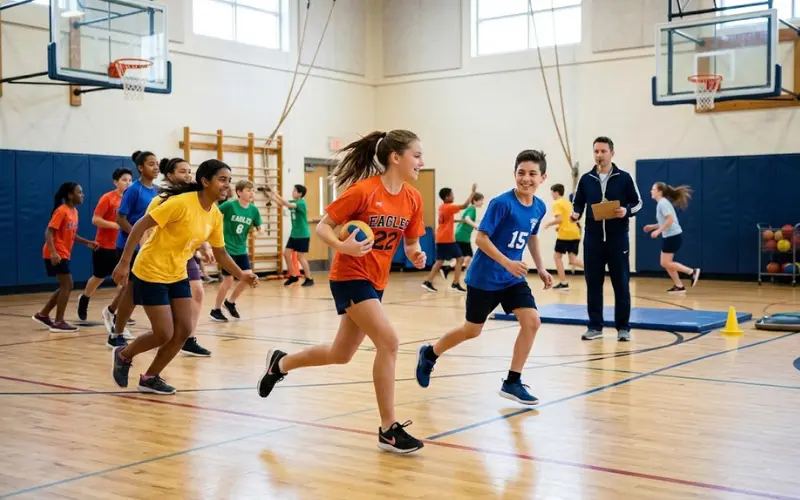
Physical movement triggers immediate physiological changes in the brain that directly support cognitive learning and academic retention.
Does Physical Activity Boost Memory and Executive Function?
Aerobic movement increases blood circulation to the brain and stimulates the release of Brain-Derived Neurotrophic Factor (BDNF). This protein promotes neuroplasticity, strengthening neural connections within the hippocampus and prefrontal cortex. As a result, students experience measurable improvements in:
- Working memory capacity
- Problem-solving speed and mental flexibility
- Attention span during subsequent classroom lectures
These cognitive gains explain why incorporating structured activity within a physical education middle school setting leads to improved performance in complex analytical subjects.
What Is the Optimal Frequency of PE for Academic Growth?
More activity does not automatically guarantee better academic performance. Studies evaluating physical training routines indicate that moderate physical activity—specifically two to five sessions per week—delivers the highest cognitive returns across core academic subjects.
When athletic schedules exceed this threshold, performance gains often taper off due to fatigue and reduced study time. Structured, moderate physical education in schools provides an optimal balance for mental focus without overwhelming students.
Why Is Motor Skill Development Time-Sensitive for Young Students?
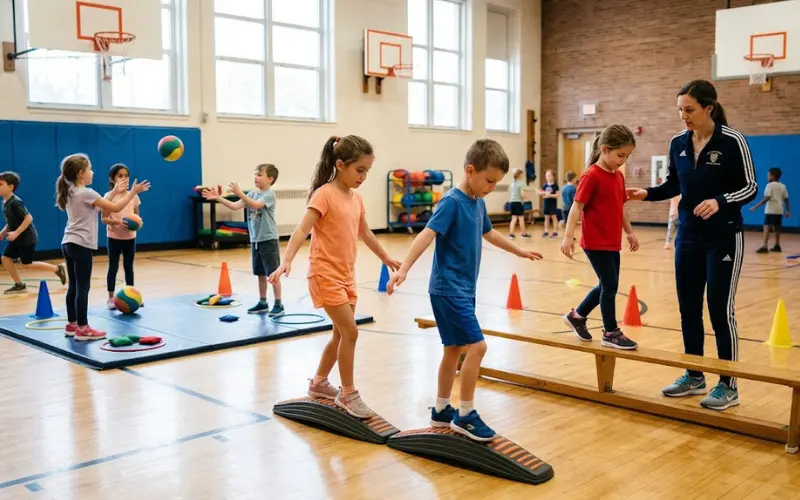
Elementary school represents a critical developmental window for motor learning in the central nervous system. During these early years, children must learn fundamental movement patterns that form the base for lifelong coordination.
Structured physical instruction teaches core physical competencies, including:
- Dynamic balance and spatial coordination
- Proper running mechanics and stride efficiency
- Hand-eye coordination through object control, such as throwing, catching, and striking
When schools rely solely on unstructured free play, children miss systematic instruction in these fundamental skills. Lacking targeted motor guidance early on can lead to long-term coordination deficits that limit future physical participation.
How Does PE Support Mental Health and Build Resilience?
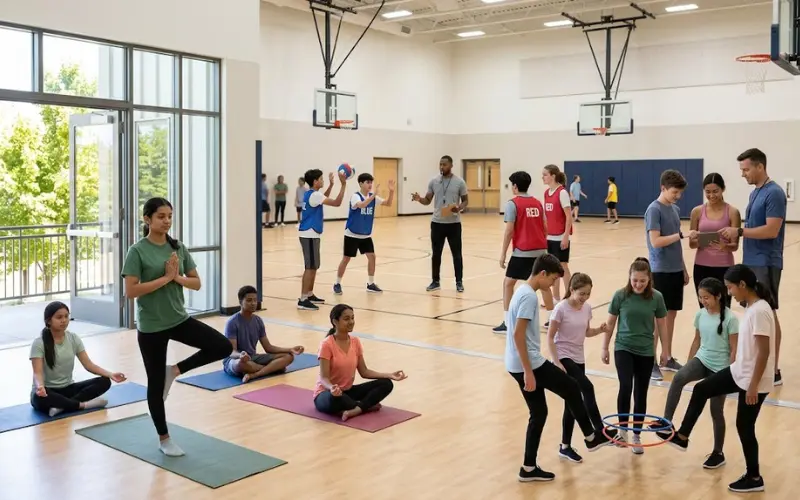
While standard classroom subjects evaluate students through written exams, gym class provides a distinct space for developing real-time emotional control and social resilience.
Learning to Manage Public Failure in a Safe Environment
Gym classes offer a setting where students encounter immediate, low-stakes physical challenges—such as missing a target or losing a competitive match—without receiving a negative grade on their academic record. Learning to manage minor public set-backs builds psychological resilience, helping students navigate stress outside of school.
How Can Badly Structured PE Classes Be Prevented from Causing Anxiety?
Physical education only yields positive mental health outcomes when instruction remains inclusive. Traditional models built around public fitness scoring, student-led team selection, or elimination games can heighten social anxiety among less experienced students.
To foster a supportive environment, modern educators structure the physical education classroom around inclusive strategies:
- Conducting private fitness check-ins between teacher and student
- Implementing teacher-assigned teams balanced by skill level
- Offering non-competitive options like yoga, personal fitness tracking, or outdoor walking
- Utilizing structured team building activities for physical education to encourage peer support
What Does Adapted Physical Education Look Like for Students with Special Needs?
Under federal mandates like the Individuals with Disabilities Education Act (IDEA), physical education is a mandatory service rather than an optional elective. Students with physical, sensory, or cognitive differences are legally entitled to adapted physical instruction tailored to their specific developmental goals.
In practice, Adapted Physical Education (APE) integrates essential modifications:
- Sensory and Visual Adaptation: Using high-contrast or sound-emitting equipment for visually impaired students.
- Mobility Accommodations: Adjusting court boundaries and game structures so wheelchair users can participate alongside peers.
- Structured Regulation: Integrating routine movement breaks to assist students on the autism spectrum with sensory regulation throughout the school day.
Preserving gym budgets ensures schools maintain certified specialists capable of delivering these individualized accommodations effectively.
How Much Physical Education Do Students Need by Age Group?
Leading national health bodies, including SHAPE America, provide clear guidelines comparing recommended daily physical activity with target school instructional minutes:
| Age Group | Recommended Daily Physical Activity | Recommended Weekly School PE Time |
| Ages 3–5 (Preschool) | At least 3 hours of varied active play throughout the day | Integrated daily active movement |
| Ages 6–17 (Elementary to High School) | At least 60 minutes of moderate-to-vigorous physical activity | 150 minutes per week (Elementary) 225 minutes per week (Middle/High School) |
| Ages 18+ (Higher Education) | 150 minutes of moderate aerobic activity weekly | Elective courses / Credit-based requirements |
What Concrete Steps Can Parents and Educators Take to Support PE?
Protecting physical education requires actionable steps from both parents and school personnel.
- Review District Allocation: Audit the weekly physical activity minutes provided by your local school against national benchmarks.
- Secure Dedicated Funding: Apply for external support, such as grants for physical education equipment, to supplement tight school budgets.
- Formalize IEP Goals: Ensure specific adapted physical education objectives are clearly detailed within a student’s Individualized Education Program (IEP).
- Advocate for Inclusive Policies: Encourage administrators to shift away from public fitness score announcements toward individualized progress tracking.
About the Author
Written by Ethan Bennett, an education specialist focused on physical literacy, curriculum development, and evidence-based health strategies in schools.
FAQ’s on Why Physical Education Is Necessary for Every Student
Is physical education legally required in all public schools?
While most states mandate physical education in their curriculum frameworks, actual weekly time requirements vary significantly. Many districts reduce gym requirements in high school to accommodate academic electives.
How does physical education differ from unstructured recess?
Recess consists of unguided free play focused on informal socialization. Physical education is an academic subject led by certified educators using structured curricula to develop motor skills, physical fitness, and long-term health knowledge.
Can poorly structured physical education harm student engagement?
Yes. Gym programs that rely on public fitness testing, elimination games, or peer-led team selection can increase anxiety and reduce participation among lower-skilled students. Inclusive instruction ensures all students benefit safely.
References & External Sources
- National Association for Sport and Physical Education & SHAPE America. National Standards & Grade-Level Outcomes for K-12 Physical Education. Human Kinetics.
- Centers for Disease Control and Prevention (CDC). The Association Between School-Based Physical Activity, Including Physical Education, and Academic Performance. U.S. Department of Health and Human Services.
- Physical Education Overview on Wikipedia – Comprehensive background on curriculum history, international standards, and pedagogical approaches.