
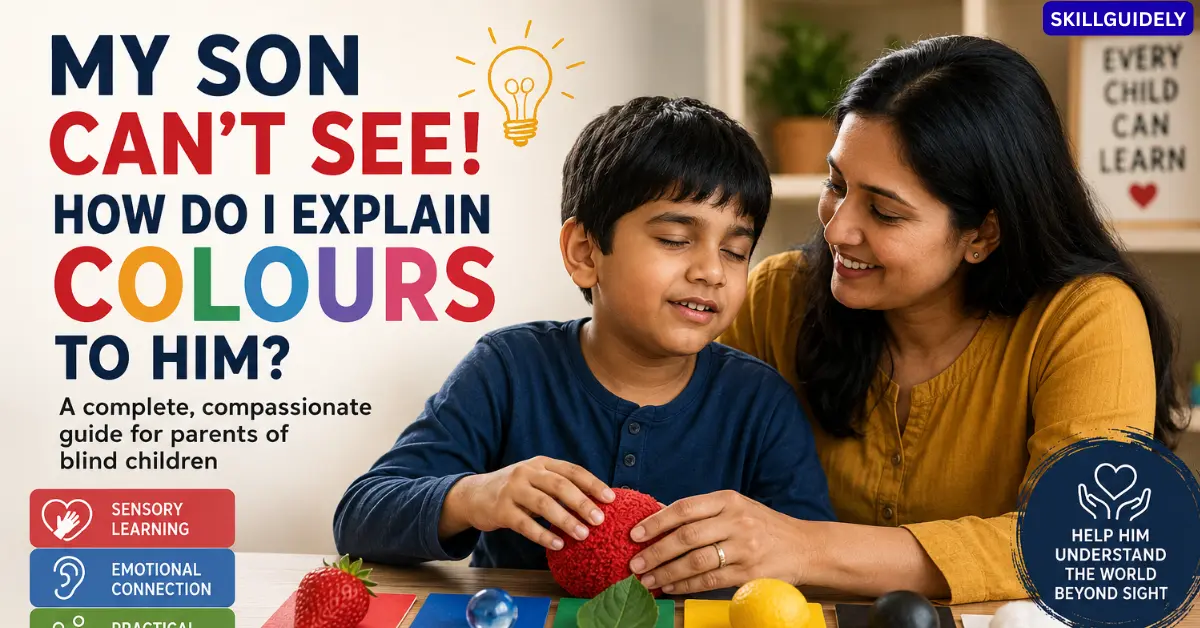
When you first realize your child may never experience sight, one question can feel overwhelming:
How do I explain colours to my son if he cannot see them?
It may seem impossible at first, because colours feel like something purely visual. But the truth is simple and reassuring. Colours are not only what the eyes see. They are also emotions, experiences, meanings, and patterns in everyday life.
A blind child can understand colours deeply, even without vision. The key is not teaching “how colours look,” but helping your child understand what colours mean in the world.
Can a Blind Child Understand Colours?
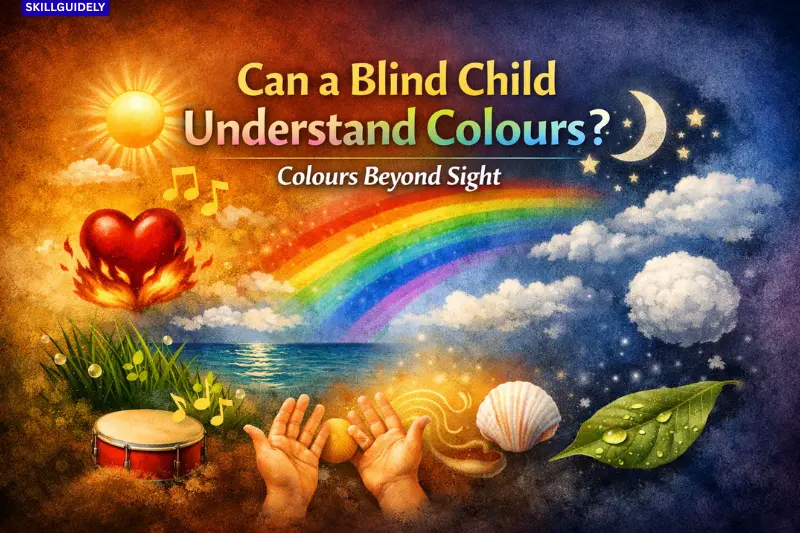
Yes, absolutely.
A child without sight can still build a complete understanding of colours through:
- Emotions (happy, calm, exciting feelings)
- Sensory experiences (heat, cold, softness, sound)
- Daily life examples (food, clothes, nature)
- Language used in society
For example:
- Fire trucks are often described as red
- The sky is described as blue
- Grass is known as green
- Night is described as black
Even without seeing these, your child builds meaning through repetition and experience.
Colours become a concept, not just a visual image.
Why It Is Important to Teach Colours
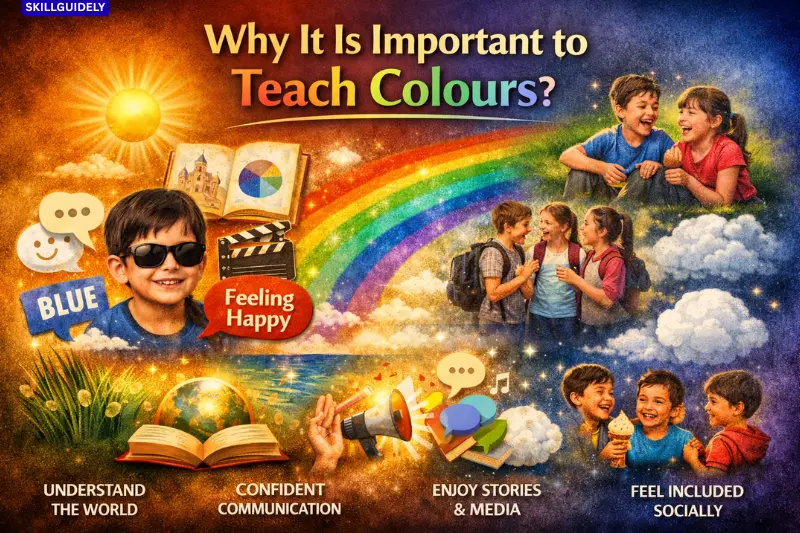
Some parents avoid talking about colours because they feel it may confuse or upset their child. In reality, avoiding the topic can create more confusion later.
Colours are everywhere in communication:
- School lessons
- Storybooks
- Daily conversations
- Movies and media
- Social expressions like “feeling blue” or “red flag”
Without understanding colour meanings, a child may miss parts of conversations or feel left out socially.
Teaching colours helps your child:
- Understand the world better
- Communicate with confidence
- Enjoy stories and media
- Feel included in social situations
The Right Way to Explain Colours
The most effective method is simple:
Instead of describing how a colour looks, describe:
- How it feels
- What it reminds people of
- What emotions it creates
- What real-life things are associated with it
This builds strong mental connections instead of visual imagination.
How the Brain Learns Colours Without Vision
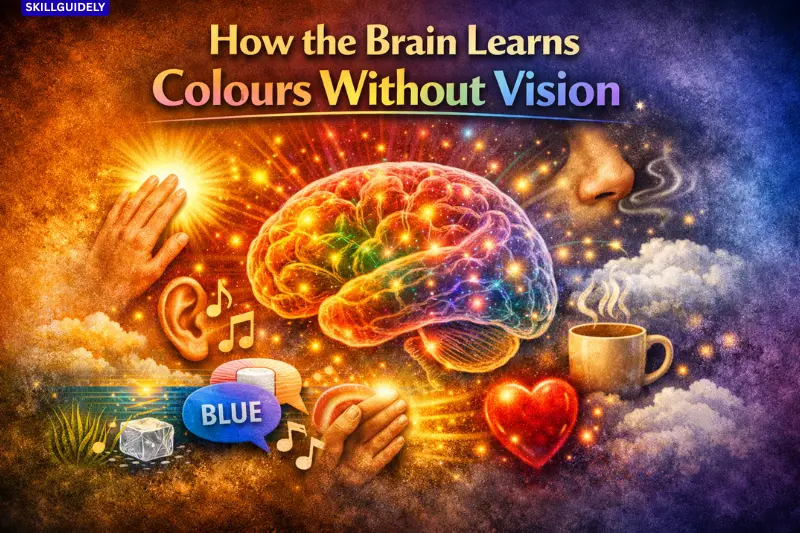
A key point many guides miss is how learning actually happens.
The brain is highly adaptable. When vision is not available, it strengthens other senses like:
- Touch
- Hearing
- Smell
- Temperature
- Memory and emotion
Over time, repeated experiences create strong associations.
For example:
If your child repeatedly hears that sunshine is warm and happiness is linked to brightness, the idea of “yellow” becomes connected to warmth and joy.
This is called conceptual association learning.
Simple Ways to Explain Individual Colours
Red
Red is strong, warm, and powerful.
You can say:
“Red feels like heat from fire or strong energy like excitement.”
Connected ideas:
- Fire
- Roses
- Warm sunlight
- Strong emotions like love or warning
Blue
Blue is calm and peaceful.
You can say:
“Blue feels like quiet water or a cool breeze on a peaceful evening.”
Connected ideas:
- Ocean
- Sky
- Rain
- Calm feelings
Green
Green is fresh and natural.
You can say:
“Green feels like soft grass or fresh leaves after rain.”
Connected ideas:
- Plants
- Trees
- Nature
- Growth and life
Yellow
Yellow is bright and happy.
You can say:
“Yellow feels like warm sunshine and joyful energy.”
Connected ideas:
Sunlight
Smiles
Happiness
Energy
Black
Black is deep and quiet.
You can say:
“Black feels like nighttime when everything becomes still and silent.”
Connected ideas:
- Night
- Silence
- Mystery
- Strength
White
White is soft and peaceful.
You can say:
“White feels clean and calm like soft snow or a quiet room.”
Connected ideas:
- Snow
- Clouds
- Peace
- Simplicity
Real-Life Learning (Most Important Method)
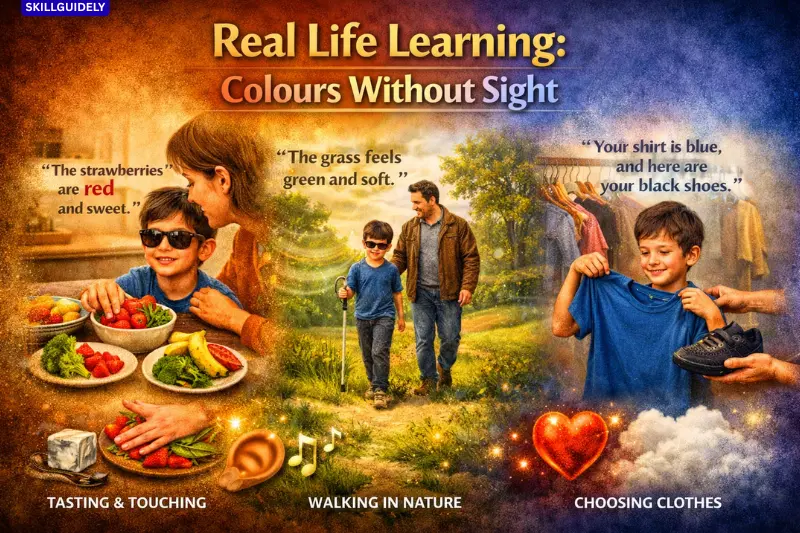
Colours become meaningful when they are part of everyday life.
During meals
Talk about food naturally:
- Red strawberries
- Green vegetables
- Yellow bananas
Example:
“This fruit is called red. People often connect red with strong and sweet feelings.”
During walks
Use nature for learning:
- Green grass
- Blue sky
- Brown trees
Also connect senses:
- Wind (cool = blue feeling)
- Sun (warm = yellow feeling)
During clothing choices
Use simple daily descriptions:
- “Your blue shirt”
- “Your black shoes”
This helps your child:
- Understand clothing discussions
- Build independence
- Feel included socially
Using Emotions and Sound Associations
Another powerful method is linking colours with sound and emotion.
Examples:
- Red → loud drums, excitement
- Blue → soft piano, calmness
- Yellow → cheerful music, happiness
- Black → deep low sounds, silence
This method helps children remember colours naturally through feeling rather than sight.
Age-Based Learning Approach (Important Missing Step)
Most guides skip this completely.
Early childhood (2–5 years)
Focus on:
- Simple emotions
- Basic objects
- Daily repetition
School age (6–10 years)
Add:
Stories and symbolism
Social meanings of colours
More vocabulary
Teen years (11+)
Teach:
Abstract meanings (culture, idioms)
Emotional depth in storytelling
Independent understanding in conversations
Common Mistakes Parents Should Avoid
Do not say:
“Because you can’t see, you won’t understand colours.”
Do not:
- Over-explain science (light waves, physics)
- Teach too many colours at once
- Turn learning into a test or quiz
Instead:
- Keep conversations natural
- Repeat ideas in daily life
- Make learning relaxed and pressure-free
Helping Your Child Feel Included
One of the most important goals is social inclusion.
Blind children often hear colour language everywhere. Helping them understand it means:
- They can enjoy stories fully
- They can follow conversations
- They feel part of school life
- They gain confidence in communication
Even simple phrases like:
“She looks happy in that red dress”
“It was a dark and rainy blue evening”
become meaningful instead of confusing.
Final Thoughts
Explaining colours to a blind child is not about teaching vision. It is about building meaning.
Your child does not need to see colours to understand them.
Through emotions, sounds, touch, and everyday experiences, colours become part of how they understand the world.
With patience and simple daily conversations, your son will not only learn colours but also understand the feelings and meanings behind them.
And that understanding will help him feel connected, confident, and included in life.