
Understanding academic papers on developing ESL reading skills is important for teachers, students, and researchers who want to improve English reading ability in second language learners. These papers explain what works in reading instruction, why students struggle, and which teaching methods are most effective.
However, most research papers are difficult to read, highly technical, and focused on statistics rather than practical teaching. This guide simplifies those academic findings and adds missing insights, real classroom applications, and modern learning strategies that many competitors do not include.
What Are Academic Papers on Developing ESL Reading Skills?
Academic papers on developing ESL reading skills are research-based studies that explore how English language learners (ELLs/ESL students) improve reading comprehension, vocabulary, fluency, and critical thinking.
These papers usually include:
- Experimental studies in classrooms
- Meta-analyses of multiple reading interventions
- Cognitive and linguistic research
- Teaching strategy evaluations
The main goal is to identify effective methods for improving ESL reading performance.
Why ESL Reading Skills Are Difficult to Develop
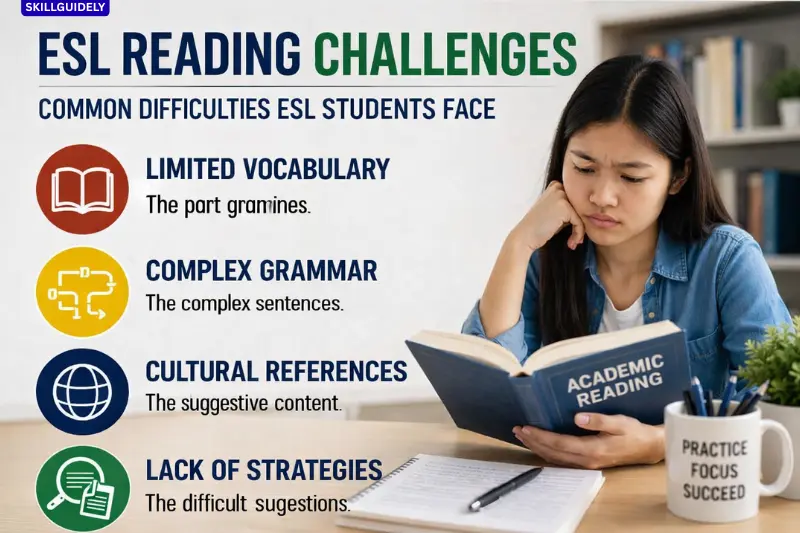
Most academic research agrees that ESL learners face several challenges when developing reading skills:
Vocabulary limitations
Students struggle because they do not understand key words in texts.
Grammar complexity
Long and complex sentences make comprehension difficult.
Cultural differences
Texts often include cultural references that ESL learners do not understand.
Lack of reading strategies
Many learners read word-by-word instead of using strategies like scanning or summarizing.
Low exposure to English reading
Limited reading practice reduces fluency and comprehension speed.
These challenges are consistently highlighted in academic literature, but many papers do not explain how to solve them in simple classroom steps.
Key Findings from Academic Research on ESL Reading Skills
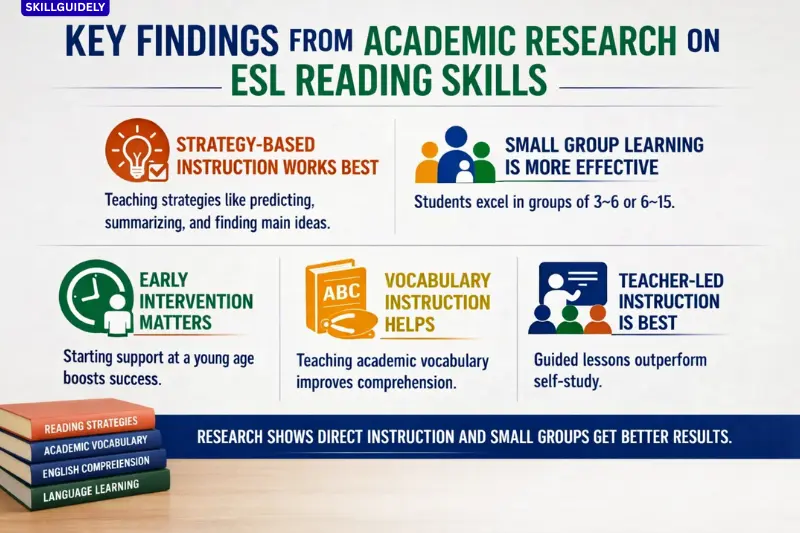
Research papers across different studies show several important findings.
Strategy-based instruction works best
Students improve more when teachers explicitly teach reading strategies like:
- Predicting meaning
- Summarizing paragraphs
- Identifying main ideas
- Making inferences
Small group learning is more effective
Studies show ESL students perform better in:
- Small groups (3–6 students)
- Medium groups (6–15 students)
Large classes reduce individual attention.
Early intervention matters
Younger learners improve faster when reading support starts early.
Vocabulary instruction improves comprehension
Direct teaching of academic vocabulary significantly improves reading performance.
Teacher-led instruction is more effective than self-learning
Guided instruction produces better outcomes than independent reading alone.
Missing Insights from Competitor Research (Important Gap)
Most academic papers do NOT include these modern and practical elements:
AI-powered reading support
Modern tools like AI reading assistants can:
- Simplify difficult texts
- Explain meanings instantly
- Generate summaries
- Create practice questions
This is rarely included in academic research but is highly relevant today.
Real-world reading practice integration
Students improve faster when reading materials include:
- News articles
- Social media content
- Everyday conversations
- Job-related texts
Competitors focus mostly on textbooks and academic passages.
Emotional and motivation factors
Many studies ignore:
- Student interest
- Motivation to read
- Anxiety in reading English
But motivation is a key predictor of reading success.
Digital reading habits
Modern ESL learners read on screens, not just paper. Research is still catching up with:
- Online reading behavior
- Mobile learning apps
- Interactive reading platforms
Effective Strategies from Academic Papers (Simplified)
Here are proven strategies based on research, explained simply.
Pre-reading activities
Before reading, teachers should:
- Introduce key vocabulary
- Ask prediction questions
- Show images or context
While-reading support
During reading:
- Break text into small sections
- Ask comprehension questions
- Highlight key ideas
Post-reading activities
After reading:
- Summarize the text
- Discuss main ideas
- Answer critical thinking questions
Types of Reading Interventions in Academic Research
Research papers classify ESL reading interventions into several types:
Phonics-based interventions
Focus on sounds and pronunciation.
Vocabulary instruction
Focus on meaning of words and usage.
Reading comprehension strategies
Teach how to understand and analyze text.
Technology-based interventions
Use computers, apps, and online tools.
Peer-assisted learning
Students learn in pairs or groups.
👉 Among these, strategy-based instruction consistently shows the strongest results in most meta-analyses.
Practical Classroom Applications (What Competitors Miss)
Here are simple, ready-to-use teaching ideas:
Main idea hunting activity
Give students a paragraph and ask them to:
- Find the main idea in one sentence
- Highlight supporting details
Vocabulary prediction game
Before reading:
- Students guess meanings of new words
- Then confirm after reading
Group summarization task
Students work in groups to:
- Summarize each paragraph
- Combine summaries into full meaning
Question generation activity
Students create:
- 3 factual questions
- 2 inferential questions
- 1 opinion-based question
Why Academic Papers Are Important for ESL Teaching
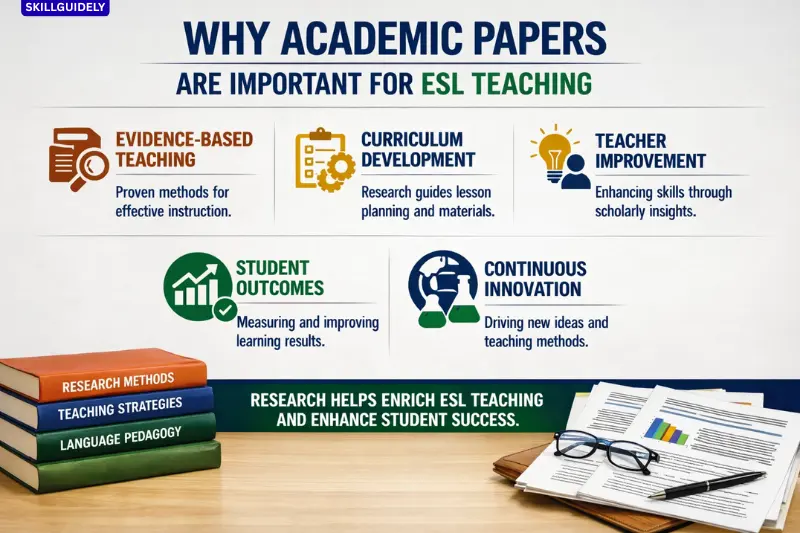
Academic research helps teachers:
- Understand what methods actually work
- Avoid ineffective teaching strategies
- Improve reading outcomes scientifically
- Design better lesson plans
Without research, teaching becomes guesswork.
Limitations of Most Academic Papers
Even strong research papers have limitations:
- Too technical for classroom use
- Focus more on data than teaching practice
- Lack real-world examples
- Do not include modern tools like AI learning systems
- Often ignore student motivation and engagement
👉 This is where practical guides become more useful for teachers.
Future Trends in ESL Reading Research
Future academic studies are moving toward:
AI-assisted reading instruction
Using smart tools for personalized learning.
Adaptive learning systems
Systems that adjust difficulty based on student performance.
Digital reading environments
Mobile-based reading platforms and interactive texts.
Multilingual support systems
Helping students connect native language with English learning.
Key Takeaways
- Academic papers on ESL reading skills focus on strategies, interventions, and learning outcomes.
- Strategy-based instruction is the most effective method.
- Small group learning improves reading performance.
- Vocabulary and comprehension skills are strongly connected.
- Real classroom application is often missing in academic research.
- Modern tools like AI and digital learning are shaping the future of ESL reading development.
FAQs on Academic Papers on Developing ESL Reading Skills
What are academic papers on developing ESL reading skills?
These are research-based studies that analyze how English as a Second Language (ESL) learners improve reading abilities. They often test methods like vocabulary instruction, phonics training, and reading comprehension strategies.
Why are ESL reading skills important in education?
ESL reading skills are essential because they help learners understand textbooks, improve academic performance, and succeed in English-speaking classrooms and exams.
What does research say about effective ESL reading strategies?
Academic studies show that strategy-based instruction, vocabulary development, and comprehension-focused teaching are among the most effective methods for improving ESL reading skills.
What are the main challenges found in ESL reading research?
Common challenges include limited vocabulary, differences in cultural background, lack of reading fluency, and difficulty understanding complex sentence structures.
Which teaching methods are most supported by academic research?
Research strongly supports:
Strategy instruction (predicting, summarizing, questioning)
Vocabulary-focused learning
Guided reading sessions
Small-group instruction
Do early interventions improve ESL reading skills?
Yes. Academic papers consistently show that early reading interventions, especially in elementary grades, significantly improve long-term reading performance for ESL learners.
How do group sizes affect ESL reading improvement?
Studies show that medium-sized groups (around 6–15 students) often produce better results than very large or very small groups because they balance attention and interaction.
What role do teachers play in ESL reading development?
Teachers play a critical role by delivering structured instruction, modeling reading strategies, and providing consistent feedback to help students build confidence and fluency.
Are computer-based reading programs effective for ESL learners?
Research shows mixed results. Some digital tools help improve vocabulary and fluency, but they are most effective when combined with teacher-led instruction.
Where can I find reliable academic papers on ESL reading skills?
You can find trusted research on platforms like Google Scholar, ERIC, Springer, and Elsevier by searching terms like “ESL reading intervention,” “ELL reading strategies,” and “reading comprehension for English learners.”
Conclusion of Academic Papers on Developing ESL Reading Skills
Understanding academic papers on developing ESL reading skills is essential for improving teaching quality and student outcomes. While research provides strong evidence about what works, it often lacks practical classroom guidance.
By combining academic findings with modern teaching strategies, real-world reading practice, and digital tools, educators can create more effective and engaging ESL reading programs.
This balanced approach bridges the gap between theory and classroom practice, helping ESL learners become confident and skilled readers.