

So you want to become a Personal Care Aide — and you want to do it without sitting in a classroom for weeks. That’s completely doable. Thousands of people complete a PCA online course every year, and for good reason: the training is flexible, affordable, and genuinely prepares you for the job.
But not every PCA online course is the same. Some programs are thorough and career-focused. Others are bare-minimum options that leave you unprepared on your first day. This guide will walk you through everything — what a PCA online course actually covers, how long it takes, what it costs, which programs are worth your money, and what to do after you finish.
By the end, you’ll know exactly what to look for in a PCA online course and how to get started.
What Is a Personal Care Aide (PCA)?
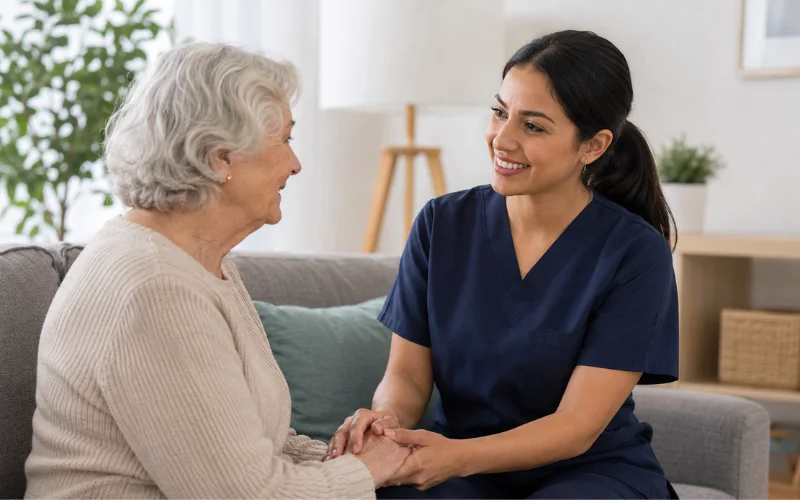
A Personal Care Aide is a trained professional who helps people with daily activities they can no longer manage on their own. Your clients are typically older adults, people living with disabilities, or individuals recovering from illness or surgery.
The work happens mostly in the client’s home, though PCAs also work in assisted living facilities, group homes, adult day programs, and nursing care centers.
On a given day, you might help a client:
- Get dressed, bathe, and groom themselves
- Move safely around their home (transfers from bed to wheelchair, for example)
- Prepare meals and follow dietary needs
- Take medications on schedule
- Keep track of their vital signs
- Manage light housekeeping
- Get to doctor’s appointments or run errands
- Simply have company and conversation
It’s work that requires both practical skill and genuine compassion. The technical parts — how to do a safe transfer, how to take a blood pressure reading, how to spot signs of infection — are exactly what a good PCA course teaches you.
What Does a PCA Online Course Cover?
Most accredited PCA online courses cover a standard set of core skills and knowledge areas. Here’s what you should expect from a solid program:
Personal Care and Activities of Daily Living (ADLs)
This is the core of the job. You’ll learn how to assist clients with bathing, dressing, grooming, toileting, and eating in ways that preserve their dignity and independence. You’ll also study how to help with mobility — safe transfers, repositioning in bed, and fall prevention.
Infection Control
Understanding how diseases spread and how to stop them is non-negotiable in caregiving. This section covers proper handwashing technique, how to put on and remove gloves without contaminating yourself, personal protective equipment (PPE), and how to handle linens, waste, and kitchen items safely.
Vital Signs and Health Monitoring
You’ll learn to measure and record blood pressure, pulse, respiration rate, and temperature — and, critically, what ranges are normal and when you need to alert a supervisor or call for help.
Safety and Emergency Procedures
What do you do if a client falls? If there’s a fire? If someone is having a medical emergency? Good PCA courses walk you through standard emergency responses, home safety assessments, and when to call 911 versus when to call a nurse.
Nutrition and Meal Preparation
Many PCA clients have specific dietary needs — low sodium, diabetic-friendly, thickened liquids for swallowing difficulties. This section covers safe food handling, food-borne illness prevention, and how to prepare meals that meet your client’s care plan.
Communication and Documentation
You’ll learn how to communicate clearly with clients, family members, and the healthcare team. This includes how to document observations in care notes — something supervisors and nurses rely on to track a client’s health.
Understanding Chronic Conditions
Better courses go beyond basic skills and give you a working knowledge of the conditions your clients are most likely to have: Alzheimer’s disease and other dementias, diabetes, chronic obstructive pulmonary disease (COPD), congestive heart failure, and stroke. You don’t need to be a nurse, but understanding what your client is living with helps you provide better care.
Professional and Ethical Standards
Topics include client rights, mandatory reporting requirements (what to do if you suspect abuse or neglect), maintaining confidentiality, professional boundaries, and how to handle emotionally difficult situations.
CPR and Basic First Aid
Many quality PCA online courses include CPR and Basic First Aid (BFA) training as part of the package or as a free add-on. These credentials are highly valued by employers and are sometimes required for certain positions.
How Long Does a PCA Online Course Take?

The standard PCA course is 40 hours of instruction — the benchmark most states and employers recognize.
In practice, how long it takes you depends on:
- Your schedule. If you can study 4–5 hours a day, you could finish in about a week. If you’re working full-time and studying evenings and weekends, expect 2–4 weeks.
- The course format. Some programs are completely self-paced with no deadlines. Others run in weekly cohorts with set start dates and structured pacing.
- Your prior experience. If you’ve worked in a caregiving role before — even informally caring for a family member — you’ll likely move through familiar material faster.
Most online PCA students complete their training in one to three weeks. A handful of programs market “2–3 day” completions, but these are typically non-clinical certification courses aimed at companion care or family caregiving, not full 40-hour programs.
How Much Does a PCA Online Course Cost?
PCA online course prices vary more than you might expect. Here’s what the market looks like:
| Type of Program | Typical Price Range | What You Get |
|---|---|---|
| Budget self-paced course | $50 – $100 | Core curriculum, certificate, basic exam |
| Mid-range full program | $100 – $200 | 40 hours, certificate, CPR/BFA often included |
| Community college / institutional | $150 – $300 | Institutional credential, broader curriculum |
| Employer-sponsored (free) | $0 | Training tied to working for that agency |
| State-mandated compliance training | $0 | Required for Medicaid-funded PCA work in specific states |
A note on free training: Some home care agencies offer PCA training at no cost — but in exchange, you typically commit to working for them. This is a legitimate option if you already know you want to work for a specific agency. But if you want flexibility to choose your employer, it’s worth paying for an independent course.
What to look for in the price: A good course should include the certificate fee in the advertised price. Watch for programs that charge separately for the exam, the certificate issuance, or course re-takes. The best programs offer unlimited exam retakes at no extra cost, because learning takes time and retakes shouldn’t be a revenue stream.
Is a PCA Online Course Accepted Everywhere?

This is the most important question most people don’t think to ask until it’s too late.
The answer is: it depends on your state and your employer.
State regulations vary widely.
Some states have formal PCA certification requirements — specific hour minimums, required topics, or registered training providers. Others have no state-level requirement at all, leaving it up to individual employers.
A few important examples:
- Minnesota: The state requires all Medicaid-funded PCAs to complete a specific state-approved training and pass a test. Only state-approved programs satisfy this.
- Virginia: PCAs working for agencies that accept Medicaid must complete a 40-hour training program. The state maintains a list of approved programs.
- Texas: Similar to Virginia — 40 hours required for Medicaid-funded positions, with specific curriculum requirements.
- Florida: No state PCA licensure required, but most employers require documented training.
- Most other states: No mandatory state certification, so most accredited online PCA courses are accepted.
Before you enroll, do two things: (1) Check your state’s health department website for any formal PCA training requirements. (2) Call the agencies or facilities you want to work for and ask whether they accept the specific course you’re considering.
Medicaid vs. private pay matters
If you want to work for a home care agency that serves Medicaid clients, the bar is generally higher — state approval may be required. If you’re planning to work for private-pay clients or start your own non-medical care business, most accredited online courses will serve you well.
Who Should Take a PCA Online Course?
A PCA online course is a great fit for:
People starting a healthcare career
PCA certification is one of the fastest, most affordable ways to enter the healthcare workforce. It gives you hands-on exposure to patient care and opens doors to CNA, HHA, and eventually nursing training.
Family caregivers who want to get paid
Many states have consumer-directed care programs that allow family members to be paid to care for a relative with Medicaid. Most of these programs require documented training — a PCA online course satisfies that requirement in many states.
Caregivers already on the job
If you’re working in a home care or assisted living setting without formal credentials, completing a PCA course formalizes your skills, makes you more attractive to employers, and can help with raises and promotions.
People considering a career change
Caregiving is one of the fastest-growing job categories in the U.S., driven by an aging population. The Bureau of Labor Statistics projects home health and personal care aide positions to grow significantly over the next decade — demand is real and durable.
Entrepreneurs starting a companion care business
If you’re launching a private non-medical home care company, a PCA certificate demonstrates professionalism to clients and their families and may be required by your state for business registration.
How to Choose the Right PCA Online Course
With dozens of options available, here’s how to separate the good programs from the ones that will waste your time and money.
1. Check what’s included in the 40 hours
Ask or verify: Is this a true 40-hour program, or something shorter marketed as a quick certification? The 40-hour standard exists because that’s genuinely how long it takes to cover the skills properly.
2. Verify curriculum depth
Does the course cover vital signs, emergency procedures, chronic disease basics, and infection control — not just a checklist of daily tasks? The curriculum should prepare you for what you’ll actually encounter on the job.
3. Look at the certificate and its acceptance
Does the issuing organization maintain a national registry? Can you verify your certificate? Can employers confirm your credentials? These details matter when you’re job hunting.
4. Check for CPR/BFA inclusion
Many employers require or strongly prefer CPR certification. If a course includes this at no extra charge, it’s a meaningful added value.
5. Read the exam retake policy
Failing an exam on the first try is normal. Good programs allow unlimited retakes. Programs that charge per retake should be a red flag.
6. Review the refund policy before you buy
Life happens. A reputable provider will offer a full refund if you haven’t completed the course and at least a partial refund afterward. If you can’t find a refund policy, that’s a warning sign.
7. Assess the user experience
A course you’ll actually complete is better than a “comprehensive” course you’ll abandon halfway through. Look for programs with mobile-friendly interfaces, short digestible modules, and clear progress tracking. Reading real student reviews (not just testimonials on the provider’s own site) helps here.
8. Look for support access
Particularly if this is your first time in healthcare, you’ll have questions. Programs that offer text, email, or chat support are meaningfully better than ones that leave you to figure things out alone.
What Happens After You Complete a PCA Online Course?
You receive your certificate
Most programs email your certificate within a few business days of passing your final exam. Some issue it immediately. Keep both a digital copy and a printed copy.
You may be added to a national registry
Some certifying organizations maintain a national caregiver registry where employers can verify your credentials. This adds legitimacy to your certificate and can speed up the hiring process.
Start your job search
With your certificate in hand, you’re ready to apply. The main employers for PCAs include:
- Home health agencies (both Medicare/Medicaid-certified and private-pay)
- Assisted living facilities
- Adult day programs
- Group homes
- Direct hire by private families (independent caregiver)
When applying, highlight your certificate, any CPR credentials, and any relevant personal experience caring for family members or others. The caregiving workforce has high turnover, which means agencies are usually actively hiring.
Consider your next step on the career ladder
A PCA certification isn’t just a credential — it’s a foundation. Many people use it as the first step toward:
- Certified Nursing Assistant (CNA): A more advanced clinical role that typically requires 75–150 hours of training and a state exam. CNAs can do more medically — take vitals, assist with some treatments — and generally earn more.
- Home Health Aide (HHA): Similar to CNA but focused on home-based care. HHA training is typically 75 hours and is required for agencies that accept Medicare.
- Medical Assistant, LPN, or RN: For those who want to advance further, PCA experience is valuable context for nursing school applications and provides a realistic preview of healthcare work.
If you know you want to move up eventually, choose a PCA course provider that also offers CNA or HHA training — you may be able to count your PCA coursework toward the next level.
Frequently Asked Questions
Do I need a high school diploma or GED to take a PCA online course?
Most PCA online courses have no formal education requirements. You need to be able to read and write in English (or the language the course is offered in), and most programs require you to be at least 18 years old.
Do I need any prior healthcare experience?
No. PCA courses are specifically designed for beginners. Prior caregiving experience is helpful but never required.
Can I complete the course on my phone?
Most modern PCA online courses are mobile-compatible. Before enrolling, test the course platform on your phone if that’s how you plan to study. Some older LMS platforms work poorly on mobile even if they’re technically accessible.
Will my employer pay for my PCA training?
Sometimes. Many home care agencies cover the cost of training if you commit to working for them for a certain period. It’s worth asking before you pay out of pocket.
Is a PCA the same as a CNA?
No. A CNA (Certified Nursing Assistant) has more training, can perform additional clinical tasks, and must pass a state competency exam. A PCA certificate is a shorter, more affordable credential focused on personal care and daily living assistance.
Can I become a PCA if I have a criminal record?
This varies by state and employer. Many states conduct background checks and have specific disqualifying offenses (particularly crimes against vulnerable adults or children). Some states allow waivers for older, unrelated offenses. If this applies to you, it’s worth checking your state’s specific regulations before investing in training.
Do PCA certificates expire?
This depends on the issuing organization and your state. Some certificates require renewal (continuing education) every one to two years. Others don’t expire. Ask your course provider directly, and check whether your target employer has their own renewal expectations.
What does a PCA earn?
According to the Bureau of Labor Statistics, the median hourly wage for personal care aides in the U.S. is around $14–$16 per hour, with variation by state, setting, and experience. Urban areas with higher costs of living typically pay more. CNAs and HHAs generally earn somewhat more due to their additional training and expanded scope.
Final Thought
A PCA online course is one of the most direct paths into healthcare work. The training is affordable, flexible, and genuinely useful — and the demand for personal care aides is strong and growing. Whether you’re starting your career, caring for a family member, or building a business, completing a quality course is a worthwhile investment.
The key is to choose a program that covers the full 40-hour curriculum, includes your certificate fee, and is accepted by the employers or state agencies where you plan to work. Do that research before you enroll, not after.
Once you’ve done it — once you’ve got the certificate and you’re out there actually helping someone live more independently at home — you’ll understand why so many people find this work genuinely meaningful.