
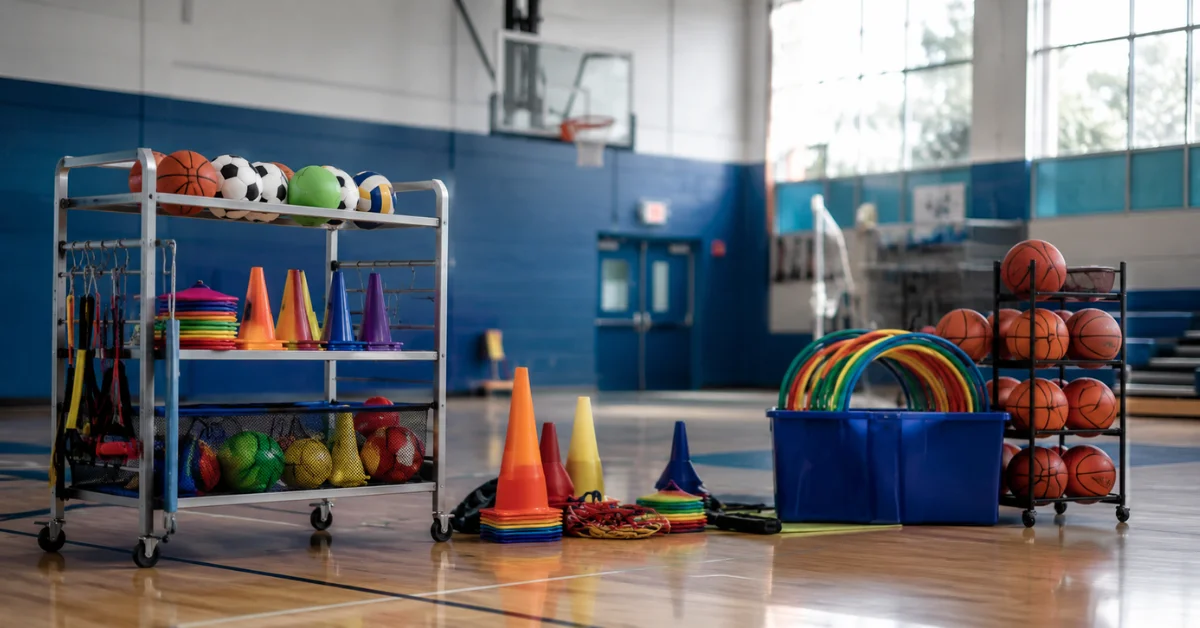
Physical education teachers and school administrators know the struggle well: shrinking budgets, aging equipment, and students who deserve better. The good news is that grants for physical education equipment exist — and a lot of funding goes unclaimed every year simply because educators don’t know where to look or how to ask.
This guide covers every major source of grants for physical education equipment available in the U.S., explains exactly what each program offers, and walks you through how to write an application that actually wins.
Why PE Equipment Grants Matter (And Why Budget Alone Isn’t Enough)
The average school PE budget runs between $764 and $1,500 per year — often for hundreds of students. That won’t replace a set of gymnastics mats, let alone stock a weight room or buy adaptive equipment for students with disabilities.
Grants change that equation. A single successful application can bring in anywhere from $500 to $25,000 in equipment, curriculum materials, and sometimes even professional development for your staff. Over a career, many PE teachers fund tens of thousands of dollars in improvements this way.
Beyond the equipment itself, grants signal something to parents, administrators, and the community: this program is worth investing in. That visibility often leads to better budget treatment down the line.
Federal Grant Programs for PE Equipment
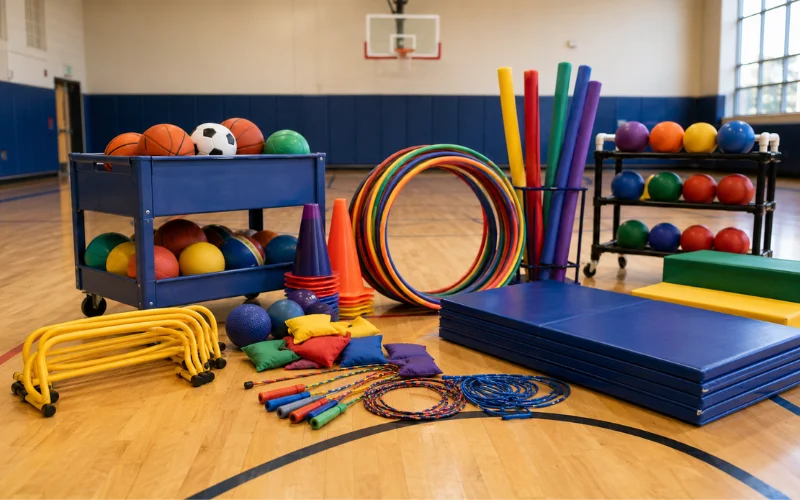
Carol M. White Physical Education Program (PEP Grants)
This is the largest dedicated federal grant program for K-12 physical education in the United States. Administered by the U.S. Department of Education, PEP grants are available to local education agencies (LEAs) and community-based organizations to help students meet state standards for PE.
What it funds: Equipment, curriculum, staff training, and program development. Awards typically range from $500,000 to $4.5 million over a three-year period.
Who can apply: Public schools, school districts, and community-based organizations serving K-12 students.
How to apply: Applications are submitted through Grants.gov when the program cycle opens. Check the Department of Education’s website for current Notice of Funding Opportunity (NOFO) announcements.
Pro tip: PEP grants are competitive and require alignment with state PE standards, student assessment plans, and evidence-based curriculum. Schools that have never applied before often partner with a grant writer or a neighboring district that has prior experience.
Title IV, Part A — Student Support and Academic Enrichment (SSAE) Grants
Less well-known than PEP but more accessible, Title IV-A funding flows to districts through a formula rather than a competitive application. Districts can direct a portion of these funds toward “well-rounded educational opportunities” — which explicitly includes physical education.
What it funds: Equipment, technology, and professional development related to PE programs.
Who applies: School districts receive these funds automatically from their state education agency. Talk to your district’s federal programs coordinator about how Title IV-A dollars are being allocated — and whether PE equipment is on the list.
IDEA (Individuals with Disabilities Education Act) Funds
Schools serving students with disabilities can use IDEA funds for adaptive PE equipment — things like hand cycles, wheelchair sports gear, and sensory motor tools. If your school has students receiving special education services, your special education director may have access to funds that could cover adaptive equipment you didn’t know you could request.
Foundation and Corporate Grant Programs
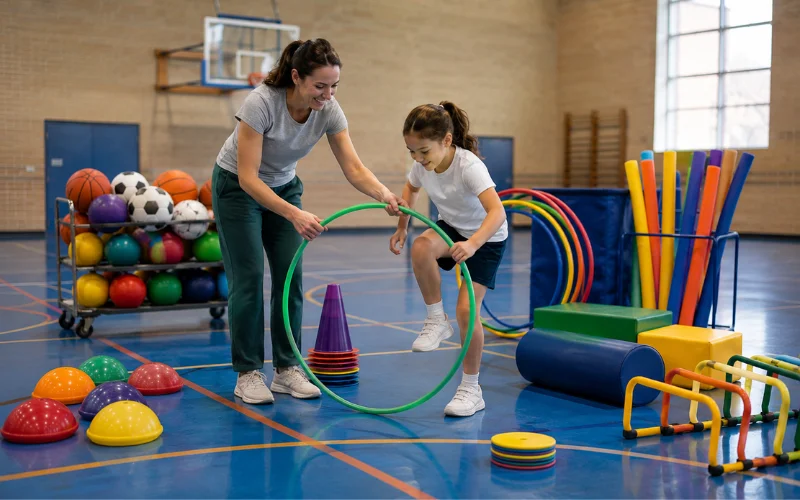
The PHIT America Grant Program
PHIT America is one of the most active private funders of physical activity in schools. Their grants cover PE equipment and also connect schools to programs like EZ Scan (a lap-tracking system) and partnerships with organizations like the USTA.
Award amount: Varies; equipment grants typically valued at $1,000–$5,000. Eligibility: K-12 schools, particularly those in underserved communities. Apply at: phitamerica.org
NFL Foundation Grassroots Program
The NFL Foundation’s Grassroots Program funds outdoor athletic field improvements, but many awards include equipment that benefits general physical activity programs. Priority is given to nonprofits and schools in low-income communities.
Award amount: Up to $250,000 for eligible projects. Eligibility: Nonprofit organizations and schools serving underserved communities.
Nike’s Community Impact Fund (through local sports associations)
Nike funds community sport and physical activity programs through partnerships with national sports associations. While not a direct school grant, schools affiliated with local youth sports organizations may access this funding.
Walmart Community Grant Program
Walmart and Sam’s Club Foundation offer community grants up to $5,000 through their local store managers. These are straightforward, lower-dollar grants that many PE teachers overlook because they feel “too corporate.” In practice, they fund a lot of equipment purchases — balls, jump ropes, cones, resistance bands — quickly and with minimal paperwork.
How to apply: Apply online through Walmart’s community giving portal. Applications open annually.
Target Circle Community Giving
Target’s community giving program allows local nonprofits and schools to receive donations. Schools with parent-teacher organizations (PTOs) that are registered nonprofits can apply for Target Circle funds and earmark them for PE equipment.
Dick’s Sporting Goods Foundation — Sports Matter
The Sports Matter grant program is one of the most PE-friendly corporate grants available. It specifically targets youth sports programs that are at risk of being cut due to lack of funding.
Award amount: Equipment grants and cash awards up to $10,000. Eligibility: Schools and youth sports organizations. Apply at: sportsmatter.org
Lowe’s Hometown Grants
Lowe’s funds community improvement projects, including school athletic facility upgrades. Equipment that improves outdoor PE spaces (storage sheds, field maintenance equipment, outdoor fitness stations) has been funded through this program.
Award amount: Up to $5,000 per project. Apply at: loweslocalgrants.com
Sport-Specific Equipment Grant Programs
Some of the best PE equipment grants come from national governing bodies (NGBs) — the organizations that oversee individual sports. These are often overlooked because teachers think of them as being for competitive athletes rather than school programs.
USTA Net Generation School Tennis Grants
The United States Tennis Association’s Net Generation program provides free tennis equipment to schools and gives access to professional coaching. Applications are straightforward, and equipment includes rackets, balls, nets, and portable court markers.
What you get: A complete equipment kit plus access to coaching resources. Apply at: usta.com/en/home/youth-tennis/programs/national/net-generation.html
USA Volleyball VB3 School Program
USA Volleyball’s school program provides equipment and curriculum support for introducing volleyball in PE classes. Equipment kits include nets, balls, and instructional materials.
USA Basketball Her Time to Play
This program provides basketballs and equipment to schools with the goal of increasing girls’ participation in basketball. Applications are accepted on a rolling basis.
CYCLE Kids Bicycle Grant
The CYCLE Kids grant (valued at approximately $25,000) provides schools with 10 new bicycles, helmets, a pump, and a curriculum designed for PE classes. It’s one of the most generous equipment grants in physical education, yet relatively few teachers apply because they don’t know it exists.
What you get: Full bicycle fleet, helmets, instructional curriculum. Apply at: cyclekids.org
Bowling Proprietors’ Association of America (BPAA) — Youth Bowling Program
BPAA provides free equipment and lane access for schools interested in introducing bowling as a PE unit. This is an underutilized option for schools near a participating bowling center.
State-Level PE Grant Resources
Every state has its own funding landscape for PE. The three most reliable places to look:
- Your State Department of Education — Search your state DOE website for “physical education grants” or “wellness grants.” Colorado, Indiana, Louisiana, California, and Texas all have active state-level programs.
- Your State SHAPE America Affiliate — Each state has a chapter of SHAPE America (the national PE teacher association). Most state affiliates offer small grants ($250–$2,500) specifically for PE teachers — equipment, professional development, or curriculum. These grants have lower competition than national programs. Find your affiliate at shapeamerica.org/membership/affiliates.
- Your State Community Foundation — Most states have a community foundation network that funds health and wellness projects. These foundations often fund projects that larger national funders overlook.
Grants for Adaptive PE Equipment
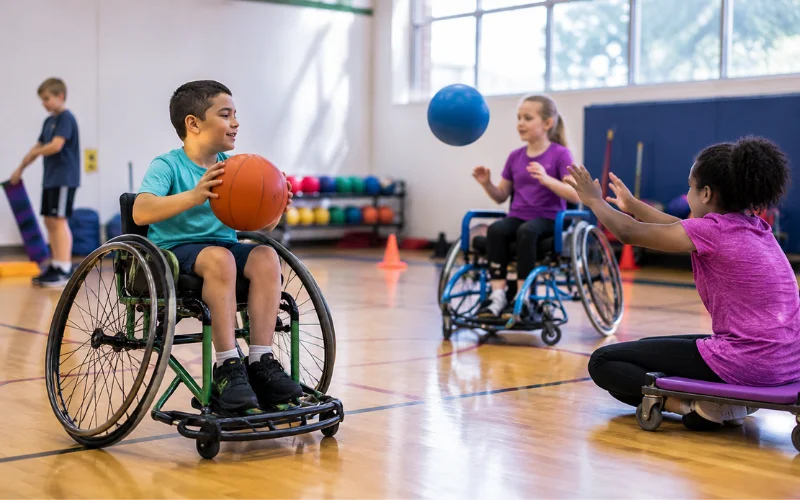
Students with physical disabilities or motor impairments have the right to participate in PE — and adaptive equipment makes that possible. Dedicated funding sources include:
- Challenged Athletes Foundation (CAF): Funds adaptive sports equipment for people with physical challenges. Schools and programs serving students with disabilities can apply.
- Variety — The Children’s Charity: Provides adaptive equipment and mobility devices for children with disabilities, including equipment used in school PE settings.
- USOPC (U.S. Olympic & Paralympic Committee) Affiliate Programs: The USOPC lists multiple partner organizations that fund adaptive athletic equipment. These are especially relevant for schools with wheelchair sports or seated athletics programs.
- Local adaptive sports organizations: Many cities have adaptive sports leagues that partner with schools. Reaching out to these groups can result in equipment loans, donations, or joint grant applications.
How to Write a PE Equipment Grant Application That Wins
Most grant applications fail not because the need isn’t real, but because they don’t communicate it effectively. Here’s what actually works:
1. Lead with the students, not the equipment
Funders don’t give money to buy basketballs. They give money to give kids the experience of sport, to build healthy habits, to reduce obesity rates, to include students with disabilities. Frame your need around student outcomes, not your equipment wish list.
Weak: “We need $3,000 for new balls and cones because our current equipment is old.”
Strong: “Our 420 K-5 students share 12 playground balls, many of which are damaged beyond use. During a typical PE class, at least 30% of students are inactive while waiting for equipment. This grant would allow every student to participate actively in every lesson.”
2. Use data from your own school
The most compelling grant applications include specific numbers. You don’t need a research study — your own school’s data is powerful:
- How many students does your program serve?
- What percentage qualify for free or reduced lunch?
- How old is your current equipment?
- How many students are inactive during class due to equipment shortages?
- What are your students’ fitness assessment results?
Even rough estimates (“approximately 60% of our students share one set of equipment between two classes”) are more compelling than vague statements.
3. Connect to the funder’s mission
Before you write a word, read the funder’s website carefully. What do they care about? Equity? Youth development? Specific sports? Disability inclusion? Then write your application using their language, showing how your project advances their goals — not just your own.
4. Show sustainability
Funders worry about whether your program will survive after the grant ends. Address this directly:
- How will you maintain the equipment?
- Does your administration support the program?
- Have you received other funding in the past?
- Are there plans to apply for additional grants in subsequent years?
5. Include a specific equipment list with prices
Vague requests (“various PE equipment”) lose to specific, itemized budgets. Show the funder exactly what you’re buying, where you’re buying it, and what it costs. This signals that you’ve done your homework and will be a responsible steward of their money.
6. Get a letter of support from your principal
A principal’s signature on a support letter tells the funder that the school administration is behind this project. Without it, funders sometimes worry that a teacher is applying for something the school doesn’t actually need or want. This single addition improves your odds significantly.
7. Follow up — and report back
After submitting, many funders allow (or even encourage) a follow-up call or email. Use it. And when you receive a grant, send a thank-you with photos and a brief update on how the equipment was used. This builds a relationship that often leads to renewed or increased funding in future years.
Practical Tips Most Articles Don’t Tell You
Apply to multiple grants simultaneously
There’s nothing wrong with submitting applications to five or six programs at once. Just make sure each application is tailored to that specific funder’s priorities.
Trade information with other PE teachers
The SHAPE America blog post by Jim Hambel (a Bronx PE teacher) is a great example — he learned about the CYCLE Kids grant from a colleague in a Facebook group. PE teacher networks are one of the best places to discover grants that aren’t widely publicized.
Don’t overlook local businesses
A local sporting goods store, a regional health system, or a community bank may fund $500–$2,000 in equipment with minimal paperwork. These relationships are often more sustainable than competitive national grants.
Timing matters
Most grant cycles open in the fall for spring awards, or in spring for fall awards. Set calendar reminders to check your top funder websites in January, April, and September each year.
Ask your district’s grants coordinator
Larger districts have staff whose job is to find and manage grants. If you work in such a district and aren’t talking to this person, you may be missing internal resources and capacity.
Document everything
Take before-and-after photos of your facility. Track how many students participate. Record fitness test scores. This documentation makes your next grant application much stronger and your current grant reporting much easier.
Quick-Reference Grant Finder Table
| Grant Program | Funder | Max Award | Best For | Deadline |
|---|---|---|---|---|
| PEP Grants | U.S. Dept. of Education | $4.5M | Districts, comprehensive programs | Annual (check Grants.gov) |
| Title IV-A | Federal (formula) | Varies | Districts with flexible funding | Ongoing via district |
| Sports Matter | Dick’s Sporting Goods | $10,000 | At-risk sports programs | Annual |
| PHIT America | PHIT Foundation | ~$3,000 | Underserved schools | Rolling |
| Net Generation | USTA | Equipment kit | Schools adding tennis | Rolling |
| CYCLE Kids | CYCLE Kids | ~$25,000 | Schools adding cycling | Rolling |
| Walmart Community | Walmart Foundation | $5,000 | Any school, quick turnaround | Annual |
| State SHAPE Affiliates | State associations | $250–$2,500 | Individual PE teachers | Varies by state |
| CAF | Challenged Athletes | Varies | Adaptive PE programs | Rolling |
| Dick’s Foundation | DSGF | $10,000 | Schools facing budget cuts | Annual |
Frequently Asked Questions grants for physical education equipment
1. What are grants for physical education equipment?
Grants for physical education equipment are funding opportunities provided by government agencies, foundations, corporations, and nonprofits to help schools purchase PE equipment, improve facilities, and expand physical education programs.
2. Who can apply for grants for physical education equipment?
Eligibility for grants for physical education equipment depends on the grant program. Public schools, school districts, charter schools, nonprofit organizations, and, in some cases, individual PE teachers or PTOs can apply.
3. What types of equipment can grants for physical education equipment cover?
Many grants for physical education equipment fund sports equipment such as balls, nets, fitness machines, gymnastics mats, adaptive PE equipment, playground gear, storage solutions, and other items that support physical education classes.
4. Are there grants for physical education equipment specifically for schools with limited budgets?
Yes. Many grants for physical education equipment prioritize schools in underserved or low-income communities and consider financial need when reviewing applications.
5. Can grants for physical education equipment be used for adaptive PE equipment?
Yes. Several grants for physical education equipment specifically cover adaptive PE equipment, helping schools provide inclusive physical education for students with disabilities.
6. How can I improve my chances of winning grants for physical education equipment?
Use school-specific data, explain how the equipment will benefit students, provide a detailed budget, align your proposal with the funder’s goals, and include a letter of support from your school administration.
7. How much funding do grants for physical education equipment provide?
Award amounts vary widely. Small community grants may offer a few hundred dollars, while state, federal, or foundation grants for physical education equipment can provide thousands or even millions of dollars for larger projects.
8. Can I apply for multiple grants for physical education equipment at the same time?
Yes. Schools often apply for multiple grants for physical education equipment simultaneously, as long as each application is customized to the specific funding organization’s requirements.
9. How long does it take to receive grants for physical education equipment?
The timeline varies by program. Some local or corporate grants for physical education equipment are awarded within a few weeks, while larger state and federal grants may take several months to review and approve.
10. Where can I find grants for physical education equipment?
You can find grants for physical education equipment through federal agencies, state education departments, corporate giving programs, private foundations, national sports organizations, and local community foundations that support school wellness initiatives.
Final Thought
Securing grants for physical education equipment can make a lasting difference to your school’s PE program without putting extra pressure on limited budgets. By researching the best grants for physical education equipment and submitting strong applications, schools can create safer, more engaging, and more inclusive learning environments.
Start with smaller opportunities, build a successful track record, and keep applying throughout the year. Over time, grants for physical education equipment can help you upgrade resources, improve student participation, and strengthen your entire physical education program.